

The Renters’ Rights Act 2025 (the “Act”) is now in force. As of 1 May 2026, Section 21 “no fault” evictions have been abolished and assured shorthold tenancies replaced with rolling periodic tenancies. For landlords, the most important practical consequence is clear: Section 8 is now the only route to possession.
For portfolio landlords in particular, the new regime demands careful attention. The compliance obligations under the Act apply on a property-by-property basis, meaning that the administrative burden scales with the size of your portfolio. Getting systems and processes right from the outset is essential, and the first deadline is fast approaching: landlords must provide tenants with a copy of the Renters’ Rights Act Information Sheet 2026 booklet by 31 May 2026.
Beyond these immediate steps, the Act requires a fundamental mindset shift. Landlords need to get organised now for when they need their property back.
Following our earlier articles on the abolition of Section 21, we set out below some of the key changes landlords need to have to hand as they navigate the new legislation.
At a Glance: Key Section 8 Grounds
Our Property Litigation team regularly assists landlords in obtaining possession. The Act provides a range of statutory grounds, the most commonly encountered of which are set out below.
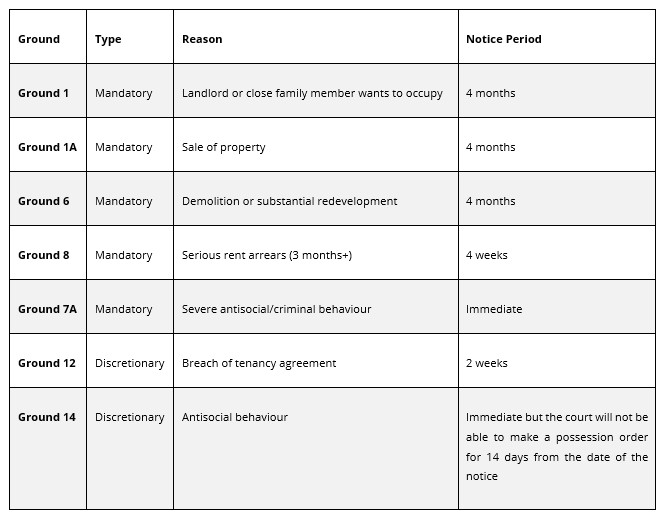
To rely on any of these grounds, a landlord must evidence their entitlement to possession, including compliance with any pre-conditions the particular ground requires. Courts are likely to scrutinise claims closely, whether mandatory or discretionary. For discretionary grounds such as antisocial behaviour or breach of tenancy, the landlord will need to persuade the court that it is reasonable to make a possession order which means engaging with the tenant before proceedings are issued and carefully gathering evidence. Even for mandatory grounds, landlords should be prepared to explain their circumstances to the court; for example, demonstrating a genuine intention to occupy the property under Ground 1.
Other Changes to Note
- Rent increases are limited to once per year via the Section 13 statutory process, challengeable at the First-tier Tribunal. Such notices can only be served once a year, and landlords must give two months’ written notice of a rent increase. Rent review clauses will not be permitted and will be inoperative.
- Payment of rent in advance for all new tenancies unless it is initial rent (no more than one month) will be prohibited.
- Rental bidding (accepting offers above the advertised rent) is banned.
- Tenants can request to keep a pet and landlords cannot unreasonably refuse. The landlord has 28 days to respond to the request in writing.
- Discrimination on grounds of benefits or children is now unlawful.
Coming Later - 2026 and Beyond
A Private Rented Sector Database requiring landlord registration is expected in late 2026 and courts will be unable to grant possession orders where a landlord has failed to register.
A Landlord Ombudsman will follow, expected to be operational by 2028.
Awaab’s Law, imposing strict timeframes for addressing hazards like damp and mould, will also be extended to the private sector at a date to be confirmed after consultation.
Robust record-keeping, proper notice procedures, and early legal advice are now more important than ever. Our Property Litigation team are well placed to advise on all aspects of the new regime, please do not hesitate to get in touch.